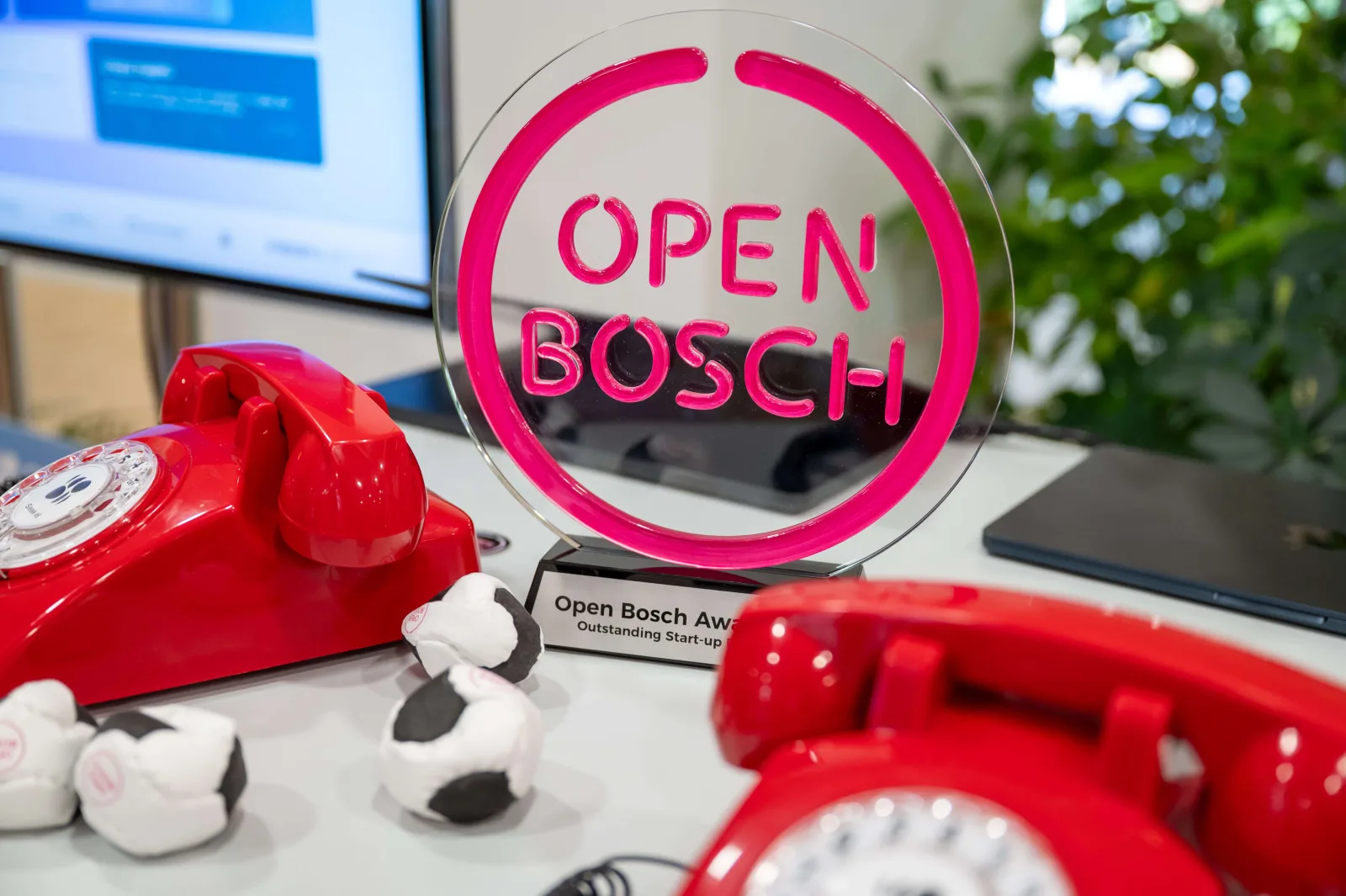
TL;DR. What started as a 9 person pilot grew to 300+ users within months and is now scaling across Bosch divisions worldwide. That collaboration won Sleak and Bosch Power Tools the Open Bosch Award 2026.
Nearly 80 applications from across the global Bosch community, six finalist teams and more than 100 people at the award ceremony at Bosch headquarters: The competition for this year's Open Bosch Award was strong. In the end, Sleak came out on top with its AI-powered negotiation coaching solution.
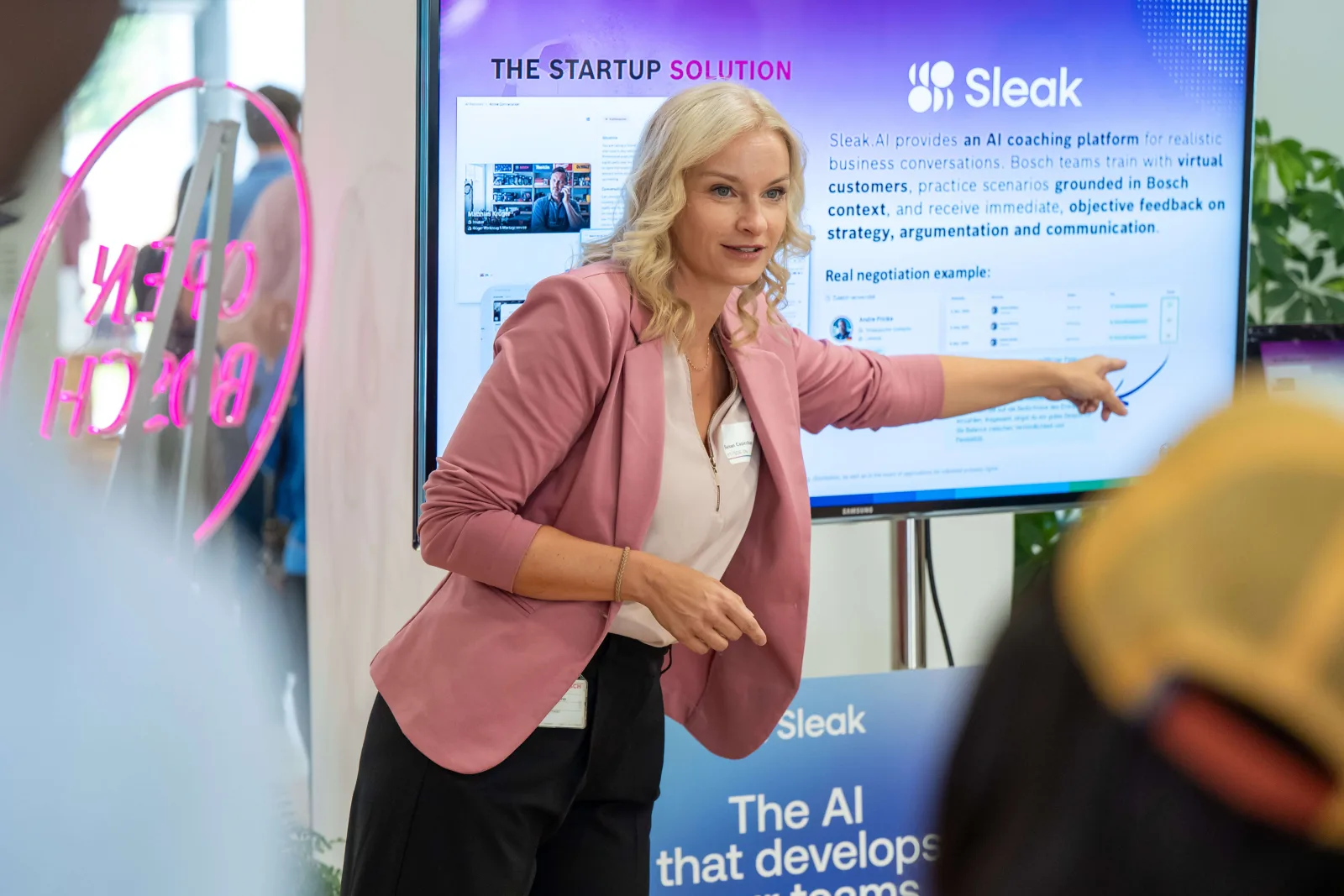
The award recognizes a collaboration that demonstrates how a small pilot can develop into a solution with measurable business impact. Sleak develops an AI Coach that can simulate realistic business conversations, provide instant feedback and help employees prepare for challenging situations, including high stakes negotiations. Bosch Power Tools uses the solution for its own negotiation use cases.
The impact can also be measured in numbers: The collaboration has helped cut negotiation rounds in half and supported an €8 million high-risk deal.
| Metric | Figure |
|---|---|
| Pilot size | 9 people |
| Today | 300+ users across 4 Bosch divisions |
| Negotiation rounds | Cut in half |
| Deal supported | €8 million, high-risk |
From Pilot Project to Everyday Business Tool
The journey began with a small pilot involving just nine people. Today, the solution is used by more than 300 users across four Bosch divisions and is currently rolling out to other Bosch divisions worldwide.
At the Open Bosch Award, Sleak competed against five other finalist teams representing a broad range of technologies and applications: Workerbase, focusing on shopfloor digitisation, Synthesia, specializing in AI generated video, as well as teams working on agentic AI for SAP, next generation sensor technology and advanced acoustic solutions.
Against such a strong field, winning the award is a significant milestone for Sleak.
As Mathias Pillin, CTO of Bosch, puts it:
"Startup partnerships help generate new business success and make us as a company stronger, for both our customers and our markets."
For Sleak, the award therefore represents more than success in a competition. It is a testament to what can happen when the expertise and reach of a global technology company meet the speed and innovation of a startup, with measurable results for the business.
Why AI-Powered Negotiation Coaching Matters
Negotiation is one of the most important skills in business, yet it is notoriously difficult to practise. Real negotiations are too important to serve as training exercises, while traditional training often offers only limited opportunities for repeated, realistic practice.
This is where Sleak comes in.
Employees can simulate high-stakes conversations, experiment with different approaches and immediately see what worked and where there is room for improvement. The result is a shift from theoretical learning to practical preparation.
The goal is simple: more practice, better preparation and greater confidence when the stakes are high.
What Comes Next
Winning the Open Bosch Award 2026 is not the end of the journey. The collaboration between Sleak and Bosch Power Tools continues to grow, with new use cases and opportunities to bring AI-powered negotiation practice to even more teams.
The ambition is to make realistic negotiation practice a natural part of how people prepare for important business conversations, turning AI from a training tool into a practical advantage in the moments that matter.
For Sleak, the award is ultimately a confirmation that an idea that started as a small pilot can evolve into a technology that creates tangible value in real business situations.
A huge thank you to everyone at Bosch Power Tools and across Bosch who helped make this collaboration possible and to the entire Sleak team behind the journey.
The award is a milestone. What comes next is even more exciting.
FAQ
What is the Open Bosch Award 2026?
Bosch's award for the startup partnership that created the most measurable value within the Bosch ecosystem that year. Nearly 80 teams applied, six reached the final round, and Sleak was announced as the winner at Bosch headquarters in front of more than 100 people in July 2026.
What does Sleak, our AI Coach, do for Bosch Power Tools?
It lets people practise high-stakes negotiations against a simulated counterpart and get immediate feedback on their argumentation, communication and negotiation approach, instead of relying only on classroom training.
How many people at Bosch use Sleak now?
More than 300 users across four divisions, up from the original pilot group of nine, and the solution is currently rolling out to other Bosch divisions worldwide.